What problem does it solve?
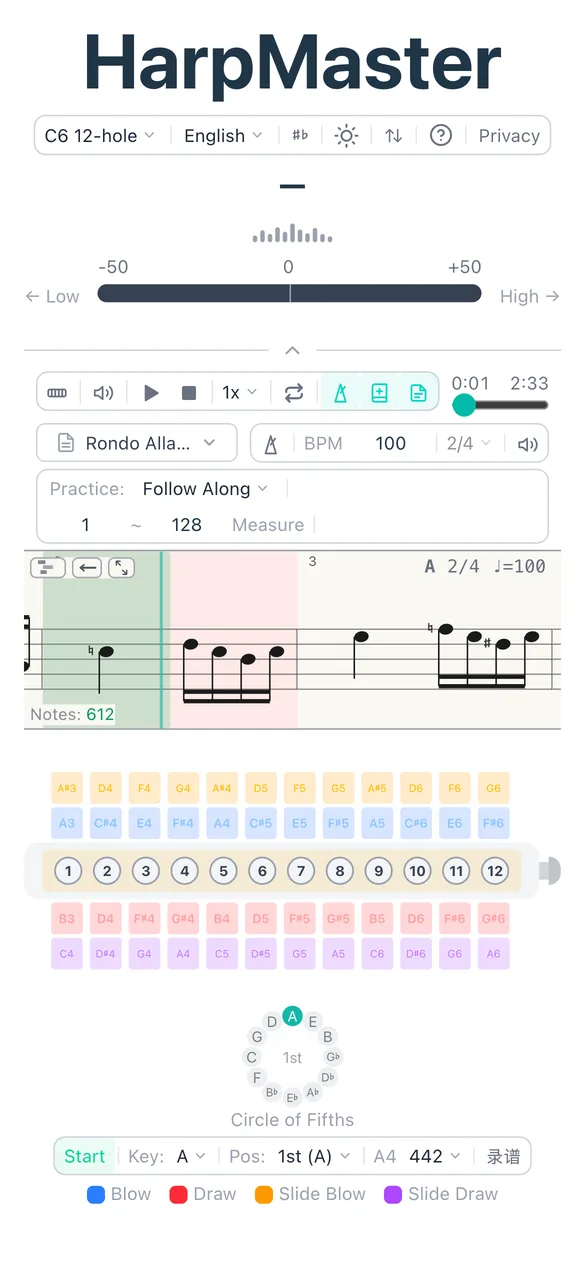
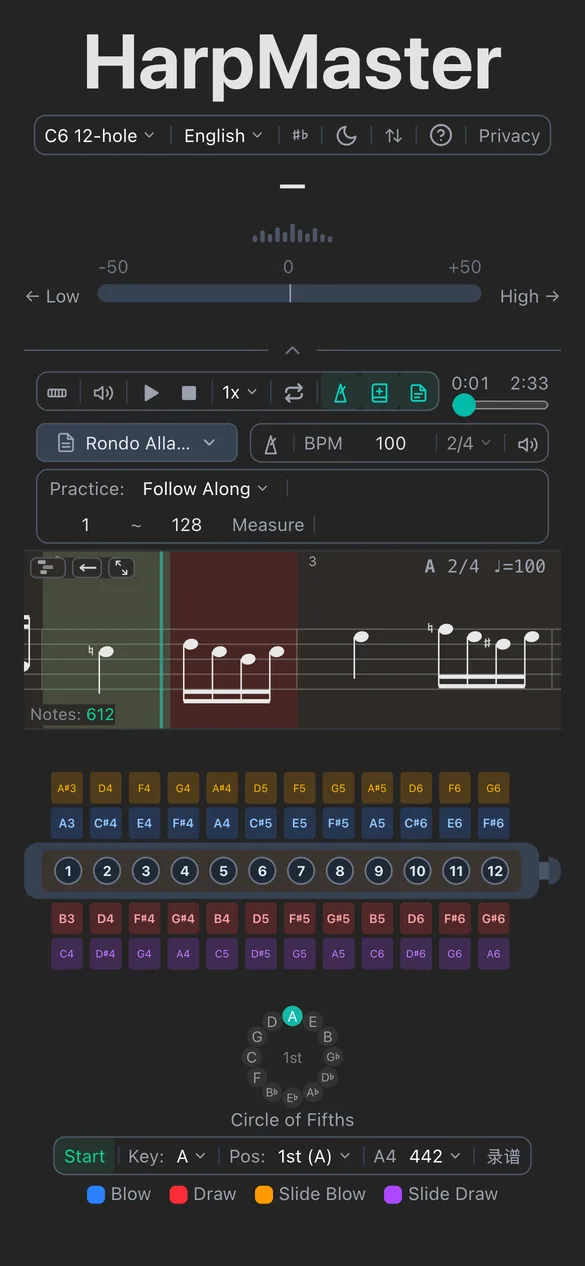
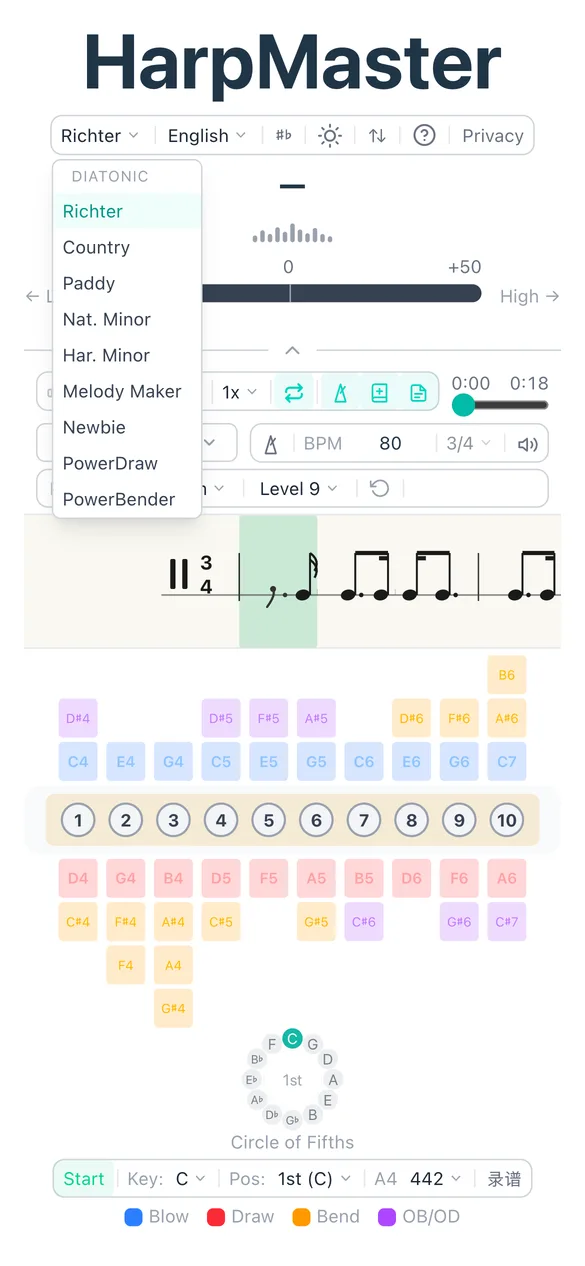
Unlike guitar, switching keys on harmonica means switching the instrument itself. HarpMaster lets you freely change keys and positions in software — whether you’re holding an A blues, a D folk, or a custom Country Tuning, the hole layout and pitch mapping stay correct.
Core capabilities
- 21 keys — Low C through High G, every common harmonica key
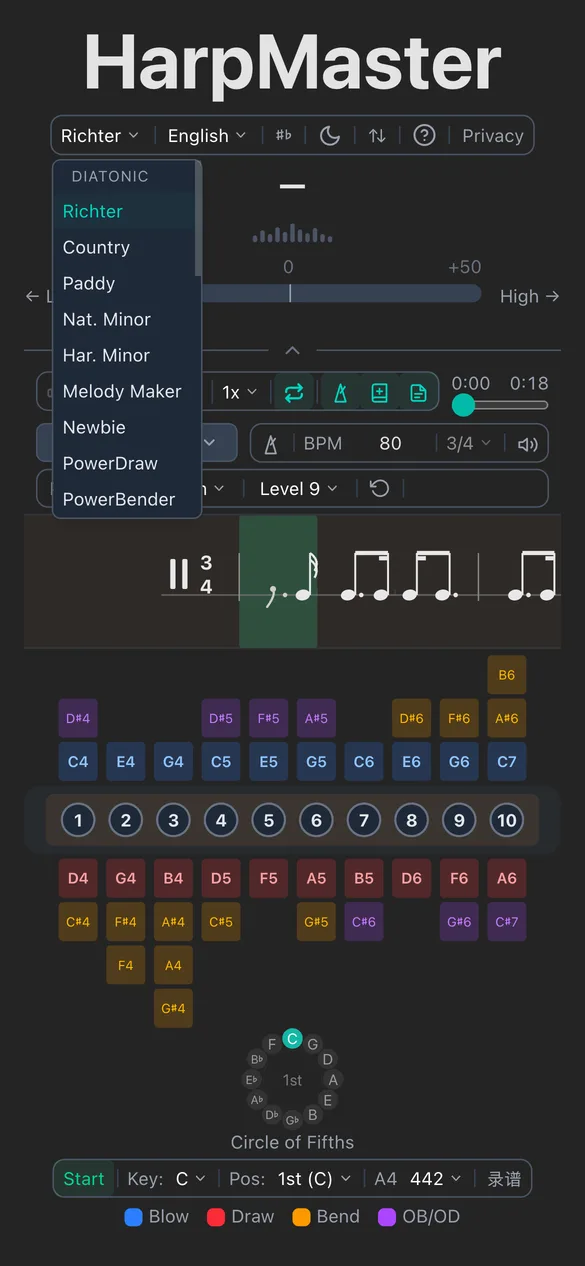
- 25+ tuning systems — diatonic: Richter / Country / Paddy Richter / Natural Minor / Harmonic Minor / Melody Maker / Power Bender and more; chromatic: Solo / C6 / Richter tunings across 8/10/12/14/16-hole variants
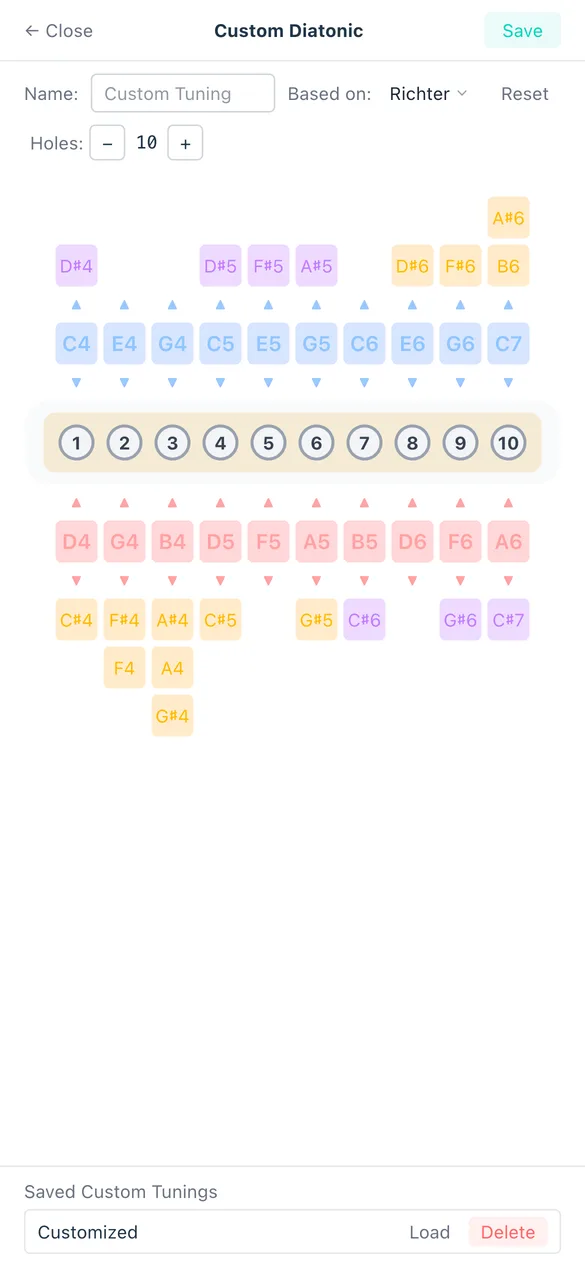
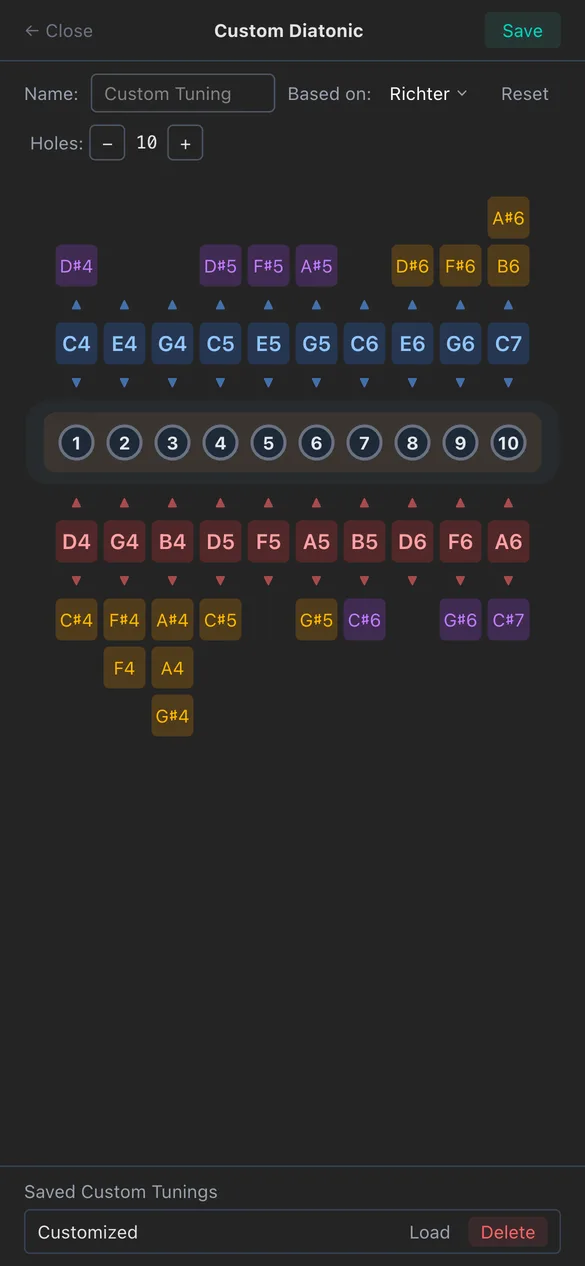
- Custom tuning editor — full-screen ▲/▼ controls to tweak each hole’s blow/draw, save and reuse
- 12 positions — 1st through 12th, root note auto-computed
- Interactive circle of fifths — SVG rotation animation, click a note to switch position, shortest-path rotation
- Adjustable A4 — 438–445 Hz
How it works
Every tuning is described as a table: each hole’s blow, draw, bend, overblow/overdraw as an interval offset from C key. At runtime, the selected key transposes every offset, and the visual harmonica updates all labels and active-hole logic.
Custom tunings live in localStorage, with JSON import/export planned.
Why this design
The harmonica community is deeply split on tuning choices — blues players use standard Richter, Irish trad players use Paddy Richter, country and pop players prefer Country Tuning. We don’t pick for you — tell us what you use, we’ll make sure the interface matches the instrument in your hand. The circle of fifths is the most intuitive way to pick positions — familiar with the 2nd-position blues feel? One click away.